


Download a PDF of the Current Issue 2015 Volume 12 Number 3 July- September
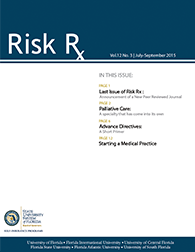 Download the 2015 Volume 12 Number 3 July- September PDF
 According to the Institute of Medicine of the National Academies, the most common medical errors are medication errors and annually account for injuries to approximately
1.5 million Individuals. Additionally, hospital medical costs related to medication injuries exceed
$17 billion a year and in outpatient settings, costs surpass 880 million dollars annually. Because of these astounding numbers, prevention of medication errors is the number one priority of the Joint Commission National Patient Safety Goals.
Why do Medication Errors Occur?
One third of a nurse’s time is spent administrating medications to patient in the hospital setting. However, the nurse is not alone in this process: It involves multiple individuals and disciplines including the hospital system, physicians and pharmacists. Because medication administration is complex, there is great potential for error.
Medication errors may occur in multiple medication administration processes including: prescribing, documenting, transcribing, dispensing, administering, and monitoring. In a study of adverse drug events, Bates et al. (1995) found that the largest percentage of medication errors (48%) occurred through ordering or prescribing of the wrong drug, dosage, or route. Overall, nurses caught and prevented 58% of all medication errors. (See Table 1)
According to the Institute of Medicine of the National Academies, the most common medical errors are medication errors and annually account for injuries to approximately
1.5 million Individuals. Additionally, hospital medical costs related to medication injuries exceed
$17 billion a year and in outpatient settings, costs surpass 880 million dollars annually. Because of these astounding numbers, prevention of medication errors is the number one priority of the Joint Commission National Patient Safety Goals.
Why do Medication Errors Occur?
One third of a nurse’s time is spent administrating medications to patient in the hospital setting. However, the nurse is not alone in this process: It involves multiple individuals and disciplines including the hospital system, physicians and pharmacists. Because medication administration is complex, there is great potential for error.
Medication errors may occur in multiple medication administration processes including: prescribing, documenting, transcribing, dispensing, administering, and monitoring. In a study of adverse drug events, Bates et al. (1995) found that the largest percentage of medication errors (48%) occurred through ordering or prescribing of the wrong drug, dosage, or route. Overall, nurses caught and prevented 58% of all medication errors. (See Table 1)


 Table 3. Medication Error Risk Reduction Strategies for the Nurse (Chilton, 2006)
Conclusion:
Medication administration is a complex process that involves interactions between diverse health care providers. Transparent health care systems, timely reporting of errors by providers and a shared dialogue will lead to system changes and improved performances and possible solutions to reduce and prevent medication errors.
References
Bates, D., Cullen, D., Cooper, J., et al. (1995). Systems analysis of adverse drug events. JAMA, 274, 1599-1603.
Chilton, L.L. (2006). Medication error prevention for healthcare providers. Program and abstracts of the National Conference of Gerontological Nurse Practitioners 25th Annual Conference; September 27-October 1, 2006; Jacksonville, Florida.
Cohen, M.R. (1997). Learning from medication errors. Nursing. Retrieved, September 22, 2008 at http://findarticles.com/p/articles/mi_qa3689/is_199710/ ai_n8774770?tag=rbxcra.2.a.4
Hughes, R.G., & Ortiz, E. (2005). Medication errors: Why they happen, and how they can be prevented. American Journal of Nursing, 105, 14-24.
Table 3. Medication Error Risk Reduction Strategies for the Nurse (Chilton, 2006)
Conclusion:
Medication administration is a complex process that involves interactions between diverse health care providers. Transparent health care systems, timely reporting of errors by providers and a shared dialogue will lead to system changes and improved performances and possible solutions to reduce and prevent medication errors.
References
Bates, D., Cullen, D., Cooper, J., et al. (1995). Systems analysis of adverse drug events. JAMA, 274, 1599-1603.
Chilton, L.L. (2006). Medication error prevention for healthcare providers. Program and abstracts of the National Conference of Gerontological Nurse Practitioners 25th Annual Conference; September 27-October 1, 2006; Jacksonville, Florida.
Cohen, M.R. (1997). Learning from medication errors. Nursing. Retrieved, September 22, 2008 at http://findarticles.com/p/articles/mi_qa3689/is_199710/ ai_n8774770?tag=rbxcra.2.a.4
Hughes, R.G., & Ortiz, E. (2005). Medication errors: Why they happen, and how they can be prevented. American Journal of Nursing, 105, 14-24.

Self-Insurance Programs
AAHP Reciprocal Risk Retention Group
Copyright© 2026